Rolfing for TMJ & Neck Issues
Who It's For
Rolfing for Migraines & Headache Relief
Your Goal
Help you reduce TMJ symptoms (jaw pain, clicking, tension) and neck issues (stiffness, pain, limited range) by releasing fascial restrictions, correcting posture/alignment, and easing interconnected upper-body strain.
My Approach
Sessions are hands-on and mindful – firm pressure where needed, but always adjustable to your comfort (many find it relieving rather than painful). For TMJ and neck issues, we release tight restrictions in the jaw, neck, shoulders, upper back, and even cranial areas, while improving overall posture and alignment so everything supports itself better, with options for gentler techniques if sensitivity is high. Most see improvements over 1-3 sessions.
The Benefits
Reduced TMJ symptoms: Less jaw pain, clicking/popping, tension, and grinding. Eased neck pain and stiffness: Improved range of motion, less forward head strain. Better posture overall: Head aligns more naturally over shoulders, reducing ongoing pull. Fewer tension headaches and related fatigue. Greater ease in daily activities: Talking, eating, working, or enjoying Folsom Lake outings without discomfort
TMJ and neck problems often go hand-in-hand, and if you're dealing with them, you know how disruptive they can be. Jaw clicking or locking when you eat, grinding teeth at night (maybe even wearing a mouth guard), constant tension headaches from clenching, or that stiff, achy neck that makes turning your head painful – especially after long desk hours or commutes on I-5/Hwy 99.
In our Folsom/El Dorado Hills area, many clients come in with the same patterns: forward head posture from screens and driving tightens the neck muscles and pulls on the jaw fascia, creating a chain of strain. Stress amps up clenching, old habits or injuries add restrictions, and soon everyday things like talking, yawning, or sleeping become uncomfortable. You've tried massage, chiro adjustments, or meds – they might ease it temporarily, but the tension returns because the root structural patterns aren't fully addressed.
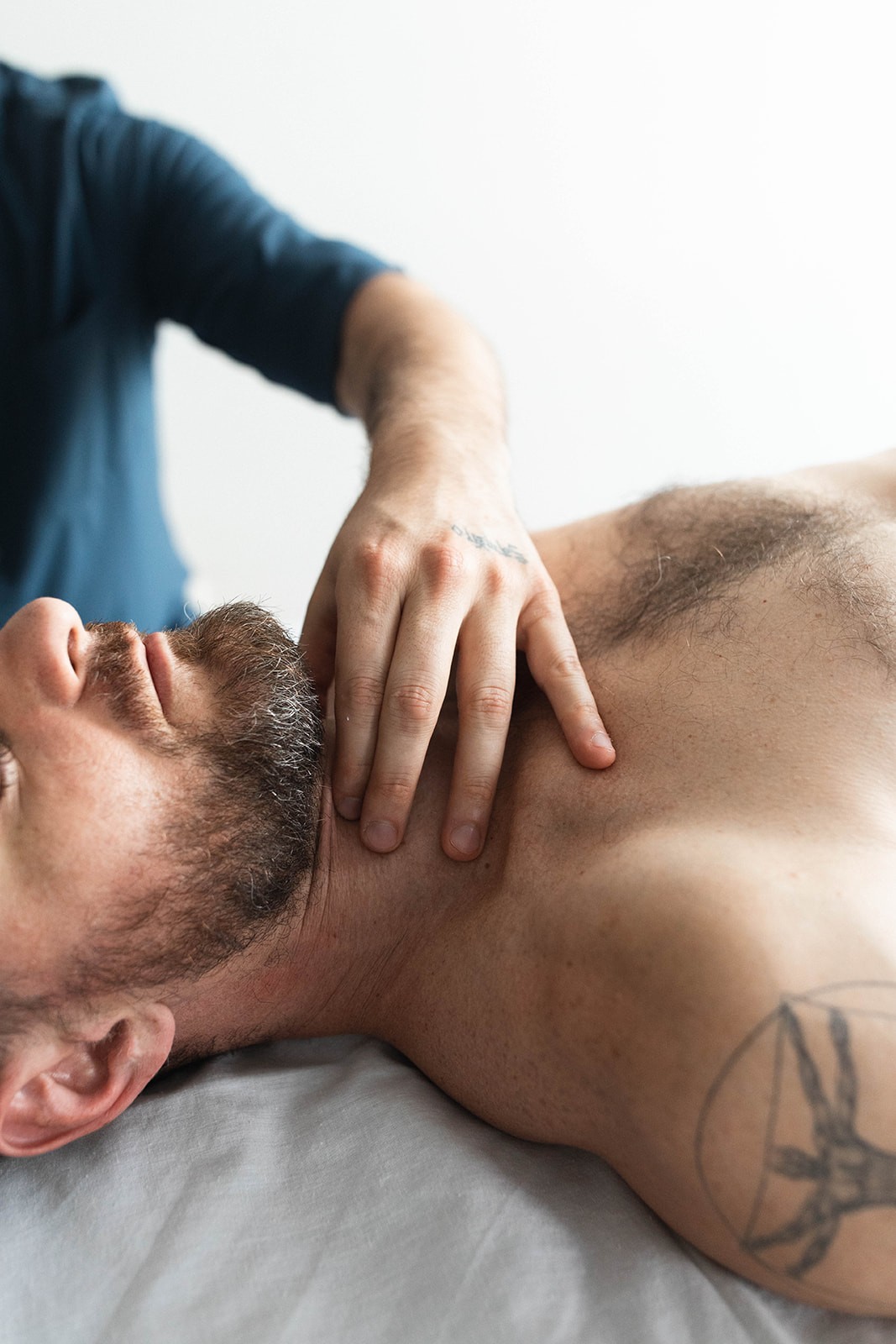
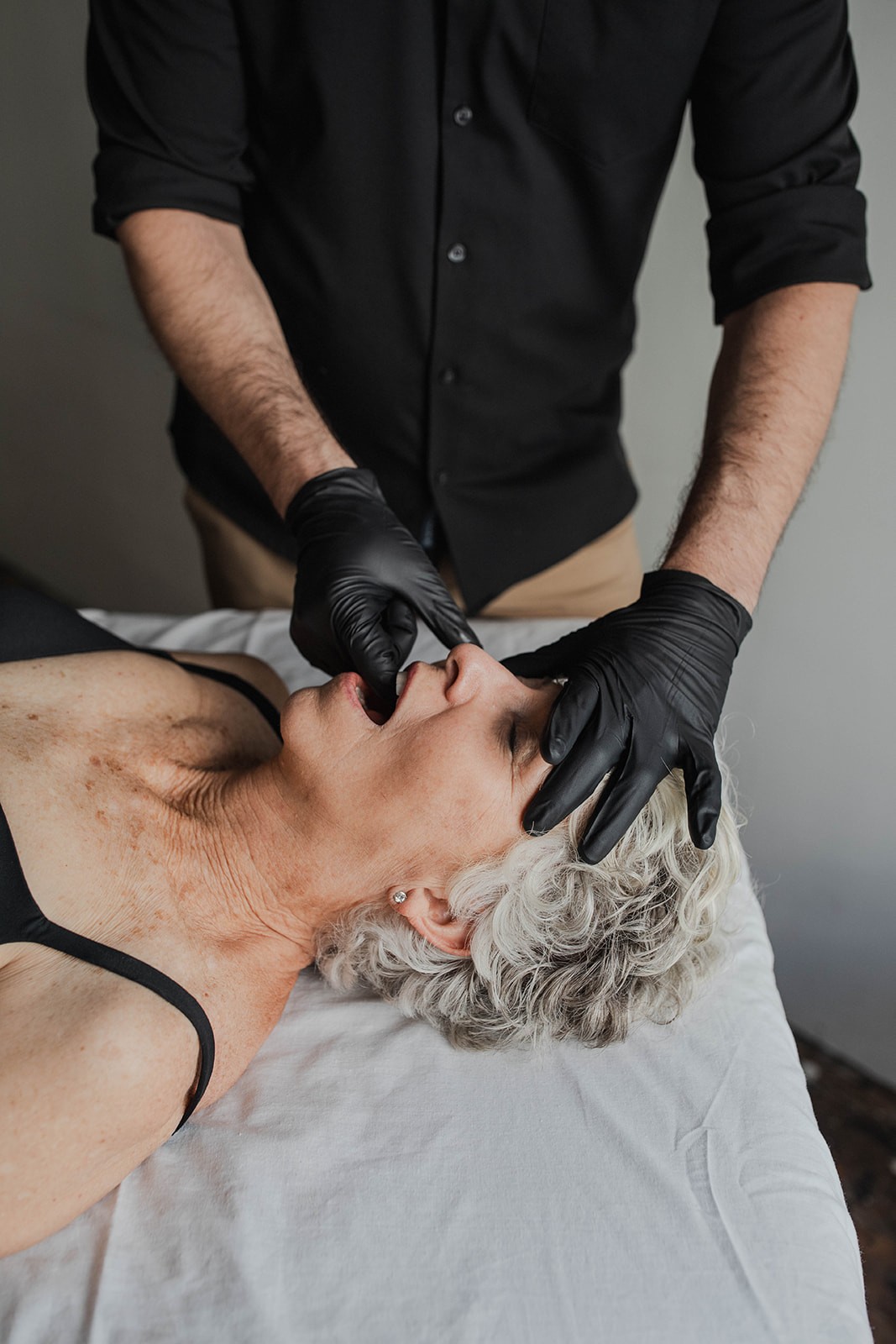
Rolfing Structural Integration works with your body's fascia – the connective tissue web that surrounds muscles, joints, and bones. For TMJ and neck issues, we release tight restrictions in the jaw, neck, shoulders, upper back, and even cranial areas, while improving overall posture and alignment so everything supports itself better against gravity.
This holistic approach helps by:
Softening and lengthening contracted fascia around the jaw (masseter, temporalis, pterygoids) to reduce clicking, locking, and pain
Releasing neck and shoulder tension (e.g., from forward head posture) for greater range of motion and less strain on cervical spine
Balancing the upper body chain – jaw to neck to shoulders to spine – so imbalances don't pull on each other
Calming nervous system overload that fuels clenching and chronic tightness